“Visibility, Trust, and Consistent Quality: Recipe for The Perfect Sandwich”
PR Campaign by: Noor Mian
Main Street Gourmet Deli
SUNY Buffalo State
Professor Deborah Silverman
Table of Contents
Executive Summary……………………………………………………………………………………………..Page 3
Analysis of the Situation………………………………………………………………………………………Page 4
Analysis of the Organization………………………………………………………………………………..Page 6
Public Perception………………………………………………………………………………………………Page 6
External Environment………………………………………………………………………………………..Page 7
Analyzing Key Publics……………………………………………………………………………………….Page 8
Secondary Research…………………………………………………………………………………………..Page 9
Content Analysis:……………………………………………………………………………………………..Page 14
In-depth Interviews…………………………………………………………………………………………..Page 23
Survey……………………………………………………………………………………………………………..Page 25
Focus Group……………………………………………………………………………………………………..Page 26
Strategy……………………………………………………………………………………………………………..Page 28
Goals and Objectives……………………………………………………………………………………………Page 29
Proactive Strategies:…………………………………………………………………………………………..Page 30
Reactive Strategies:……………………………………………………………………………………………Page 31
Message Appeal………………………………………………………………………………………………..Page 33
Verbal and Nonverbal Communication…………………………………………………………………Page 33
Communication Tactics……………………………………………………………………………………….Page 35
Owned Media…………………………………………………………………………………………………….Page 35
Shared Media……………………………………………………………………………………………………Page 37
Earned Media……………………………………………………………………………………………………Page 39
Paid Media………………………………………………………………………………………………………..Page 40
Implementation…………………………………………………………………………………………………..Page 42
Evaluation…………………………………………………………………………………………………………Page 44
Executive Summary:
Main Street Gourmet Deli & Catering is a family owned deli in White Plains, New York that has been operating since 1996. The deli is known for its fresh, homestyle food and has built a loyal customer base. However, it currently faces challenges including inconsistent service, declining revenue, limited digital presence, and weak overall visibility.
The main issue identified is inconsistent service and lack of structured communication, which impacts customer experience and online reputation. This campaign will address these issues by improving operational consistency, strengthening online reputation, and increasing digital visibility. The target audience includes locals and working professionals ages 25 to 55, as well as existing customers.
The campaign focuses on reputation management, customer loyalty, revenue growth, and online visibility. Strategies include staff retraining, improving service speed and order accuracy, encouraging online reviews, and building a consistent digital presence. Tactics include enhancing the Google Business Profile, creating a website, implementing Instagram content and engagement strategies, participating in local events, and using influencer collaborations and sponsored advertisements.
The campaign will run for six months. Success will be measured through awareness, acceptance, and action outcomes, including increases in engagement, positive reviews, repeat customers, catering orders, and overall sales.
Overall, this campaign aims to improve consistency, strengthen communication, and increase visibility to support long term growth.
Step 1: Analysis of the Situation
Background on the Issue
Main Street Gourmet Deli & Catering is a small family owned deli located in White Plains, New York, operating since 1996. Founded by owner Najeeb “Jimmy” Mian, the deli was built on a passion for food and human connection, with a mission centered on providing homestyle cooking, made fresh daily, for the local community. The establishment emphasizes quality at a fair price with fresh ingredients, while maintaining a consistent, community presence.
The deli has established a loyal base of regular customers and a strong reputation for food quality. Online platforms such as Google, Grubhub and DoorDash reflect consistent satisfaction with sandwich quality, portion sizes, and value. Customers comment on freshness, simplicity, and homemade items such as empanadas as key strengths. The deli also benefits from a convenient location near offices, hotels, and public transportation, making it accessible to working professionals. However, the business faces several operational and communication challenges. Customer feedback and interviews reveal inconsistencies in order accuracy and service speed, particularly during peak hours. While these issues can be perceived as minor, they showcase gaps that affect the overall customer experience.
Significance of the Situation
The situation is significant because Main Street Gourmet Deli is at a critical point where strong product quality alone is no longer sufficient to sustain growth. While the deli has built a solid foundation through consistency and loyal customers, evolving consumer expectations in this digital world, require a more different approach to customer experience.
The deli’s current gaps such as inconsistent service, lack of online engagement, and weak brand identity, directly conflict with the expectations of the current public. For example, perceptions of slow service and occasional order inaccuracies can discourage repeat visits, even when food quality is high. Food quality is not the standalone reason for repeated visits. Similarly, the absence of a digital presence reduces visibility and limits the deli’s ability to compete with visually stronger competitors. Without adapting to these changes, the deli risks losing potential business, particularly amongst newer and younger customers in the White Plains area.
If not addressed, the deli may continue to rely solely on its existing customer base, leading to stagnant growth, declining revenue, and reduced competitiveness along with rising food costs, in an increasingly saturated market.
Resolution of the Situation
To address these challenges, Main Street Gourmet Deli must implement a strategy that improves both internal operational consistency and strategic communication efforts digitally.
First, improving internal operations, particularly in service speed, order accuracy, and staff training, will directly enhance the customer experience. “Jimmy” has already identified retraining staff and boosting morale as key priorities, which aligns with customer feedback emphasizing consistency as the primary driver of repeat business.
Second, the deli must establish a clear and cohesive brand identity, especially online. Positioning itself as a family owned, community deli with a focus on homestyle quality provides a strong foundation. This identity should be consistently reflected across all platforms, including visuals, messaging, and in-store experience. This includes launching consistent Instagram content with branded storytelling, actively responding to online reviews to build trust, and improving visibility across platforms. Highlighting strengths such as convenience, freshness, and community connection can help reshape perceptions and build stronger emotional engagement.
Implementing a system for collecting and analyzing real-time customer feedback will allow the deli to measure success and understand gaps, in order to make more informed decisions and continuously improve. This aligns with the owner’s goal of developing measurable success indicators beyond sales alone.
By aligning its operational strengths with a more intentional communication and branding strategy, Main Street Gourmet Deli can transition from a product-driven business to an experience-driven brand, positioning itself for sustainable growth, stronger customer loyalty, and increased competitiveness within the local market.
Step 3: Analysis of the Organization
Internal
Main Street Gourmet Deli is a small family owned business in the White Plains New York area. One of the biggest internal strengths is the quality of the product, which is repeatedly reviewed as fresh and quality food with decent portion sizes and pricing. Quality control is one of the Deli‘s core values, and food that is made fresh daily and sold that same day is done to preserve taste and consistency. The deli is also located on Main Street, in White Plains, New York, right off of a bus stop.
Some weaknesses that affect the Deli’s ability to grow include inconsistency in the customer experience. The food quality is praised, service, speed, and order accuracy are not always dependable. Staff training can be lacking in areas such as service recovery, and going above and beyond for customers. While the deli’s values are clear, they are not always a reflection of its daily operations.
The deli lacks a cohesive brand identity and digital presence. It does not have a standalone website, has an inactive Instagram account, and does not engage in storytelling or have a consistent virtual brand. Online reviews are not actively managed, leaving both positive and negative feedback unaddressed.
Public Perception
The public perception of Main Street Gourmet Deli is generally positive, especially in relation to food quality, value, and convenience. Customers across review platforms often describe the deli as a reliable place for fresh quality. Positive comments showcase a love for sandwiches, homemade food, reasonable prices, and a community feel. In the customer interviews, both respondents expressed clear satisfaction with the freshness and quality of the food and stated that consistency in food quality and pricing are the primary reasons they would return.
Though, public perception is not entirely uniform. Some reviews mention long wait times, slower service, or a lack of care about details. These comments do not completely damage the deli’s reputation, but they reveal that the deli is respected for its quality product, but it is not consistently seen as polished. Though people may like the food, the business is not always leaving a strong impression.
This perception matters because customer decisions are increasingly influenced by more than the food itself. Businesses that appear responsive, visually appealing, and consistent across digital channels are often able to attract newer audiences. Main Street Gourmet Deli’s public perception is strong enough to support its current customer base, but not yet strong enough to maximize growth or stand out in a crowded local market, as of now.
External Environment
Competition
The deli operates in a competitive local food environment. Nearby businesses such as Anthony’s Deli and Iron Tomato, along with other delis present direct or indirect competition by offering similar meal convenience, lunch appeal, and fast service. While Main Street Gourmet Deli has strong food quality and loyal customers, competitors have advantages in visual branding, digital activity, and online visibility. This creates a challenge in attracting newer customers who make decisions based on online first impressions.
Opposition
There is no opposition to the deli as a business, though consumers have growing expectations for speed, convenience, visual branding, and easy online experiences. Businesses that fail to meet those expectations may lose attention even if their food quality is strong.
Impediments
Several external impediments may affect the deli’s growth. Seasonal winter slowdowns reduce foot traffic, making it harder to sustain strong sales throughout the year. Rising labor and food costs also create financial pressure, especially for a business committed to maintaining quality ingredients and reasonable prices. Additionally, lack of delivery growth and declining catering revenue suggest that existing revenue streams are not being fully developed. Delivery performance is not consistent, with additional concerns around packaging leading to complaints about food arriving cold.
Another impediment is visibility. Without a website, active social media, or a strong branded content strategy, the deli is less visible to potential new customers searching online for local food options, which is a major barrier to growth.
Step 4: Analyzing Key Publics
The key public for this campaign is locals and working professionals ages 25 to 55 in Westchester County. This public is most relevant because it matches the deli’s current and potential customer base. These individuals are likely to work nearby, order lunch during the workday, or use delivery apps for convenience. They are frequent social media users, often checking platforms multiple times per day, and are highly responsive to businesses that appear consistent, and community oriented.
This public values speed, reliability, food quality, and convenience, and is also likely to respond to authentic, local content.
A secondary key public is existing loyal customers and regulars. This group already trusts the deli and has helped sustain it over time. They are valuable not only because they provide repeat revenue, but because they can act as advocates through word of mouth, online reviews, and local recommendations. Strengthening relationships with this group and encouraging more visible feedback could help the deli build credibility among new customers.
Another important public is the deli’s internal staff. Although they are not the primary audience for promotional communication, they are central to customer experience. Since there are issues with service consistency, the staff can play a key role in whether retraining goals can be met through actual customer experience. If staff training improves, communication will become more authentic and sustainable.
Why These Publics Matter
These publics matter because they directly affect the deli’s ability to retain current customers, attract new ones, and grow its sales. Working professionals and local customers have the highest likelihood of becoming repeat buyers, especially if the deli meets their expectations for consistency, quality, and convenience. Current regulars can reinforce the deli’s reputation and strengthen its local presence. Internal staff affect whether the deli’s brand promise is actually delivered in practice.
A successful campaign should therefore focus on building awareness, reinforcing trust, and making Main Street Gourmet Deli easier to choose repeatedly in a competitive local market.
Secondary Research:
Literature Review
Houghtaling B, Serrano EL, Kraak VI, Harden SM, Davis GC, Misyak SA. A systematic review of factors that influence food store owner and manager decision making and ability or willingness to use choice architecture and marketing mix strategies to encourage healthy consumer purchases in the United States, 2005-2017. Int J Behav Nutr Phys Act. 2019 Jan 14;16(1):5.
Relevance: Understand the factors that may impede or facilitate retailer ability to implement MMCA strategies
This article looks at why food store managers choose to implement (or not implement) marketing strategies that influence consumer behavior. The study reviewed 31 articles and analyzed 788 retailers, identifying key factors such as relationships, store environment, community, and overall systems. One important takeaway is that trust between the business and the customer plays a major role in influencing purchases. The study also highlights how store cleanliness, organization, and simple promotional tactics like sampling can impact consumer decisions.
Using this research, I understand that customer relationships and the overall experience matter just as much as the product itself. For Main Street Gourmet Deli, this reinforces the importance of building trust, maintaining a clean and efficient environment, and using small promotional strategies to encourage repeat customers.
Michael Luca, 2011. “Reviews, Reputation, and Revenue: The Case of Yelp.com,” Harvard Business School Working Papers 12-016, Harvard Business School, revised Mar 2016.
Relevance: Understand how reviews influence reputation which then influence revenue.
This study focuses on how Yelp reviews impact restaurant revenue, especially for independent businesses. It finds that ratings significantly affect customer decisions for small, non-chain restaurants because reviews act as a primary source of information. It also shows that consumers rely on simple, visible information like star ratings and that higher ratings and more reviews increase credibility.
This is directly relevant to Main Street Gourmet Deli because we are an independent business. It shows that reviews are not just feedback, but a major driver of revenue. Improving ratings, increasing review volume, and managing how we appear online can directly impact customer traffic and sales.
Inyang, E., & White, J. (2026). From Reviews to Revenue: Examining the Impact of Online Reputation Management on Small Business Performance. Journal of Small Business Strategy, 36(1), 17–29. https:/ / doi.org/ 10.53703/ 001c.151294
This article looks at online reputation management (ORM) and how it affects small business performance. It defines ORM as actively shaping a business’s online image and finds that practices like responding to reviews, monitoring feedback, and engaging with customers improve overall performance. It also points out that star ratings alone are not enough, consistent engagement matters more, especially in competitive markets.
This is important because Main Street Gourmet Deli currently does not have a review response strategy. This study supports making ORM a core part of the campaign by focusing on consistent engagement, not just chasing higher ratings.
Hennig-Thurau, T., Walsh, G., & Walsh, G. (2003). Electronic Word-of-Mouth: Motives for and Consequences of Reading Customer Articulations on the Internet. International Journal of Electronic Commerce, 8(2), 51–74. https://doi.org/10.1080/10864415.2003.11044293
This article explains how electronic word-of-mouth (eWOM), such as online reviews, influences consumer decisions. It finds that people use reviews to save time and reduce risk when choosing where to spend their money. It also emphasizes that negative reviews can spread quickly and have long-term effects on a business’s reputation.
This reinforces the need for Main Street Gourmet Deli to actively manage reviews. If we are not responding or monitoring feedback, we are missing a major opportunity to influence customer decisions and protect our reputation.
Zinko, R., Furner, C. P., de Burgh-Woodman, H., Johnson, P., & Sluhan, A. (2021). The Addition of Images to eWOM in the Travel Industry: An Examination of Hotels, Cruise Ships and Fast Food Reviews. Journal of Theoretical and Applied Electronic Commerce Research, 16(3), 525-541. https://doi.org/10.3390/jtaer16030032
This study examines how adding images to online reviews impacts consumer trust. It finds that reviews with images are more effective than text-only reviews because they give customers a clearer and more trustworthy understanding of the product.
This is especially relevant for the deli because it shows how important visuals are. Encouraging customers to post photos and improving our own food presentation online can strengthen trust and make our brand more appealing.
Martindale L. (2021). ‘I will know it when I taste it’: trust, food materialities and social media in Chinese alternative food networks. Agriculture and human values, 38(2), 365–380. https://doi.org/10.1007/s10460-020-10155-0
This article examines how trust is built between food producers and consumers, emphasizing that freshness, quality, and transparency are key factors. It also highlights the role of social media in reinforcing trust through visibility and communication.
This research applies directly to Main Street Gourmet Deli, where freshness and quality are already core strengths. However, these strengths must be communicated more effectively through social media and online platforms to reinforce trust and maintain customer relationships.
Bureau of Labor Statistics, U.S. Department of Labor, The Economics Daily, Which generation spends more? at https://www.bls.gov/opub/ted/2025/which-generation-spends-more.htm
Relevance: Overview of generation spending patterns.
This report analyzes generational spending patterns and finds that individuals between 1965 and 1980 have the highest average expenditures, with overall spending increasing in recent years.
This supports targeting working professionals in Westchester County as a key public. These individuals have strong purchasing power and are likely to spend consistently on food, making them ideal repeat customers for the deli.
Staff, E. (2026, February 24). How small food brands are winning big with effective PR campaigns: A case study approach. Everything PR News. https://everything-pr.com/how-small-food-brands-are-winning-big-with-effective-pr-campaigns-a-case-study-approach/
This article highlights how small food brands use public relations strategies such as storytelling, media outreach, and influencer partnerships to build credibility and increase visibility. It emphasizes that aligning with trusted voices can strengthen brand perception and drive growth.
This is relevant because Main Street Gourmet Deli lacks storytelling and brand personality. Implementing local PR strategies, including partnerships with local influencers and community engagement, can help build visibility and strengthen its brand identity.
Avery, J., Fournier, S., & Wittenbraker, J. (2014, July 1). Unlock the mysteries of your customer relationships. Harvard Business Review. https://hbr.org/2014/07/unlock-the-mysteries-of-your-customer-relationships
This article explains that customer relationships are central to business success and must be intentionally managed. It emphasizes that customers seek to feel understood and valued, and that businesses must align their approach with customer expectations to build trust and loyalty.
This research reinforces the importance of relationship-building at Main Street Gourmet Deli. Since the deli already values personal interaction, strengthening staff training and aligning communication with customer expectations can improve satisfaction and retention.
Coggins, B., Adams, C., Alldredge, K., Hopcus, A., Shamoun, J., & Bucklin, L. (2025, June 9). State of the consumer 2025: When disruption becomes permanent. McKinsey & Company. https://www.mckinsey.com/industries/consumer-packaged-goods/our-insights/state-of-consumer
This report examines changes in consumer behavior, noting that customers increasingly prioritize convenience, speed, and value. It also highlights that digital engagement and delivery expectations have become standard in consumer decision-making.
This is critical for Main Street Gourmet Deli, as it shows that improving service speed, delivery experience, and online presence is necessary to meet modern expectations and remain competitive.
Hidayat, K., & Idrus, M. I. (2023). The effect of relationship marketing towards switching barrier, customer satisfaction, and customer trust on bank customers. Journal of innovation and entrepreneurship, 12(1), 29. https://doi.org/10.1186/s13731-023-00270-7
This study focuses on relationship marketing and its impact on customer satisfaction, trust, and retention. It finds that satisfaction leads to trust, and trust leads to long-term loyalty.
This supports the need for Main Street Gourmet Deli to focus on consistent service and customer satisfaction. Building trust through reliable experiences and communication will strengthen customer loyalty.
Arinto, B., Humairoh, H., & Wijaya, S. S. (2024). What drives customer loyalty in culinary businesses. *Dynamic Management Journal, 8*(3), 810–824. [https://doi.org/10.31000/dmj.v8i3.11656](https://doi.org/10.31000/dmj.v8i3.11656)
This article finds that food quality, price, and service quality are the primary drivers of customer satisfaction and loyalty, while location and ambience are less influential.
This directly validates Main Street Gourmet Deli’s strengths. The deli already performs well in food quality and value, meaning the strategy should focus on improving service consistency and communicating these strengths more effectively rather than changing its core offering.
Primary Research:
Content Analysis:
In order to understand where Main St Gourmet Deli stands with its competitors, a content analysis was done to evaluate content, visibility, customer engagement and branding. The two competitors chosen were Anthony’s Deli and The Iron Tomato, as they are established food businesses in the surrounding area selling similar food items. The comparison reveals that both competitors have a stronger online presence, and helps to understand where opportunities lie in order to improve visibility and consumer trust for Main St Gourmet Deli.
Main Street Gourmet Deli:
Website: Main Street Gourmet Deli does not currently have a standalone website and relies primarily on its Google Business Profile and third party delivery platforms, Grubhub and DoorDash, for online visibility.
Menu: The menu is located on the Google Business Profile, and is regularly updated. Menu items range from breakfast to lunch options, detailed into categories
User Friendliness: Because there is no standalone website, consumers are relying on Google, Yelp, DoorDash, or Grubhub to find information. While these platforms provide access to reviews, menu information, and ordering functions, Main Street Gourmet Deli has limited control over how its business is introduced to potential customers. This makes first impressions heavily dependent on third party platforms rather than owned media such as a website.
Appearance: Branding is not consistent across platforms. Photography on social media sites such as Instagram, or on the Google reviews page, appear casual rather than professionally developed into a clear visual identity. While some delivery platform images are strong, the business does not currently maintain a cohesive digital appearance that reinforces personality or professionalism.
Content: Main Street Gourmet Deli’s Instagram is inactive, with only eight total posts and no activity since July 30, 2019. The content that was posted mainly featured food photos and specials. There is little current content supporting awareness, engagement, or brand personality. On delivery platforms, menu descriptions are more detailed and do more to explain the offerings than the business’s social media presence does.
Summary: Overall, Main Street Gourmet Deli has a limited digital presence. Its online reputation suggests that customers generally like the food, especially the sandwiches and homemade items like empanadas, but the business lacks a cohesive brand identity and consistent communication strategy. Without a standalone website, active social media, or a visible review response strategy, Main Street is relying on existing regulars and passive discovery rather than intentional digital communication. This is a significant weakness in a competitive market where visibility, recency, and trust strongly influence customer decisions.
Google Business Profile:
Star Rating: 4.0/5
Total Reviews: 44
Most Recent Review: 2 months ago
Business Response to Reviews: No
Reviews emphasize strong sandwiches, good service, convenience, and simple but well made food. Negative themes include slow service, lack of personality, perceived favoritism, and slower online orders compared with in person ordering.
Yelp:
Star Rating: 3.3/5
Total Reviews: 12
Most Recent Review: March 28, 2025
Business Response to Reviews: No
Yelp reviews emphasize convenience, especially the grab and go format and nearby bus stop location. Positive comments mention homemade empanadas and friendly in store interaction. Negative comments focus primarily on slow service.
Instagram:
Link: https://www.instagram.com/mainstreetgourmetdeli?igsh=djlpZHFubjR6dGNk
Followers: 31
Total Posts: 8
Post Frequency: Inactive
Average Likes: 22
Average Comments: 1
Stories Assessment: No highlights
Summary: Main Street Gourmet Deli’s social media presence is extremely limited. The account has not been active since 2019 and does not currently contribute to awareness, engagement, or loyalty. There is no evidence of storytelling, regular content, or community building. In contrast to the business’s strong regular customer base in person, its digital presence does not communicate activity, or personality.
Grubhub:
Star Rating: 4.5
Total Reviews: 232
The Grubhub profile shows relatively strong customer satisfaction overall. However, visible complaints about styrofoam packaging causing food to arrive cold and inconsistency in the food experience suggest operational issues that may affect repeat business and digital trust. Grubhub offers some professionally taken photos.
DoorDash:
Star Rating: 4.3
Total Reviews: 200+
DoorDash appears to provide strong menu images and detailed descriptions. This is one of the most important digital first impression points for new customers, particularly since Main Street Gourmet Deli lacks a website and an active social media presence. The full menu is able to be accessed online on Doordash, however prices are not the same as in person.
Anthony’s Deli
Link: https://www.anthonysdeli.com/
Website: Anthony’s Deli has a website. The website features a professional picture of a sandwich, with links to the menu, daily specials, and catering.
Clarity of Mission: Anthony’s Deli communicates its identity as a neighborhood Italian American deli through its messaging on the website. It emphasizes its long-standing presence in the community, serving Mamaroneck and Harrison since 1987, which reinforces its local credibility. The deli positions itself around value for its pricing, highlighting its “overstuffed” wedges and promising customers more for their money. Its messaging is direct and easy to understand, focusing on fresh ingredients, large portion sizes, and customer satisfaction.
User Friendliness: The website is an online menu, easy to read and scroll, both mobile and online. There are separate sections for breakfast, sandwiches, daily specials and catering.
Appearance: Based on its Instagram presence, Anthony’s appears visually stronger online than Main Street Gourmet Deli. The colors are bright and contrast the background, making each section stand out.
Content: Anthony’s posts consistently and uses its content to share sandwich photos, weather related closures, and calls to action such as asking followers to vote for the business for “Best Deli.” This suggests a more active and intentional use of digital content to maintain visibility and customer engagement.
Summary: Anthony’s Deli appears to have a stronger and more active digital presence than Main Street. Its consistent posting and stronger visual identity likely help keep the business top of mind with customers and support stronger digital visibility overall.
Google Business Profile:
Star Rating: 4.7/5
Total Reviews: 621
Most Recent Review: 1 week ago
Business Response to Reviews: No
Reviews emphasize regular customers stating their appreciation for the deli’s longstanding operations. The reviews emphasize sandwich size and quality, along with pricing and service quality, establishing how the deli stands out in all aspects.
Yelp:
Star Rating: 4.3/5
Total Reviews: 129
Most Recent Review: October 30, 2025
Business Response to Reviews: No
Yelp reviews emphasize the old school, cash only atmosphere that customers say is worth going to the ATM for. Customers rave about the deli being the best in the area, with no competition, and emphasize their value and great quality for the price.
Instagram:
Followers: 3,033
Total Posts: 193
Post Frequency: Consistent
The Instagram features updated closings, bright colored photos with pictures of their egg sandwiches and deli sandwiches, and catering items. They also post about being nominated as a local favorite deli in the Westchester area, highlighting their community loyalty.
Grubhub:
Star Rating: 4.5/5
Total Reviews: 687
Anthony’s Deli has strong visual representation on Grubhub, with photos available for most menu items. The menu includes clearly named signature sandwiches and specials, which helps understand their offerings and creates a fun ordering experience. Many reviewers highlight food quality and satisfaction with their meals. Positive reviews also emphasize fast delivery. Negative feedback includes instances where order instructions were not followed, which resulted in a one-star review from a top reviewer, carrying additional visibility and influence.
DoorDash:
Star Rating: 4.2/5
Total Reviews: 3000+
Anthony’s Deli maintains updated photos on DoorDash, contributing to a strong visual presence on the platform. The high number of reviews suggests strong visibility and consistent order volume.Many reviews emphasize food quality and overall satisfaction. Some negative feedback includes concerns about value, with one reviewer noting that a BLT sandwich was not worth the price. Other comments suggest inconsistency between online images and the actual food received. One review directly compares Anthony’s to a competing deli, stating their preference for a less expensive alternative.
Summary: Anthony’s Deli has a much stronger Instagram presence than Main Street Gourmet Deli. Its larger following, greater posting volume, and more active communication style suggest that they use social media as an ongoing marketing and relationship building tool rather than simply maintaining an account.
The Iron Tomato
Link: https://theirontomato.com/
Clarity of Mission: The Iron Tomato clearly communicates its focus on offering high quality, fresh ingredients across a wide range of menu options. The website highlights its ability to serve breakfast all day, along with lunch, dinner, sushi, salad bar, catering, and takeout. This positions the business as a versatile food destination rather than a single category deli. It is clear what the business offers and that it aims to provide variety and convenience to its customers.
User Friendliness: The website is easy to navigate and user friendly. Upon entering the site, menus for both breakfast and lunch are clearly outlined and accessible. The homepage features moving images of food items such as pizza and desserts, as well as the storefront, which helps visually engage the user. Overall, it is easy to click through the site, read menu options, and understand what the business offers without confusion.
Appearance: The website uses moving images and visuals of food items to create an engaging experience. The inclusion of product imagery and storefront visuals adds to the overall presentation and helps communicate the type of food and atmosphere customers can expect.
Content: The content focuses heavily on menu offerings and variety. The business emphasizes fresh ingredients and a wide selection of food options, including catering. The messaging is straightforward and centered on product offerings rather than storytelling or brand personality.
Summary: Overall, The Iron Tomato has a strong and functional website that clearly presents its menu and offerings. It is easy to navigate and visually engaging, making it effective for customers who are looking for quick information and menu access. However, the content focuses more on variety and product than on building a strong brand identity or emotional connection.
Google Business Profile:
Star Rating: 4.2/5
Total Reviews: 752
Customers state their appreciation for their regular orders such as breakfast and lunch sandwiches. The owner regularly replies to the reviews, both positive and negative. Reviews also mention the owners kindness and friendship with customers.
Yelp:
Star Rating: 3.5/5
Total Reviews: 377
Reviews are mixed. One recent review highlights that the food is still great, while another describes a negative experience, calling it the worst sandwich they have had. The business responded to negative reviews, acknowledging the issue and offering to resolve it directly with a credit for future use. This demonstrates an active approach to customer service and reputation management.
Grubhub:
Star Rating: 4.8/5
Total Ratings: 2004
The Grubhub page includes photos for some menu items and detailed descriptions, helping customers understand what they are ordering. Positive reviews emphasize great food quality, strong delivery experience, and particularly well liked paninis. Negative feedback includes longer than expected pickup times, missing items, and orders not being prepared as requested.
DoorDash:
Star Rating: 4.6/5
Total Reviews: 200+
The DoorDash page includes a large number of photos and detailed visual representation of menu items. There is also a visible note from the business on the page, a level of engagement with potential customers. Reviews highlight strong sandwich quality and overall satisfaction with food. Some negative comments mention that certain items, such as fries, were not well received.
Instagram:
Activity Level: Not consistently updated
The deli’s Instagram features photos of catering items and visually bright food and bakery products. While the visuals are appealing, the account is not consistently updated, which limits its effectiveness as an engagement tool.
The Iron Tomato demonstrates strong visibility across multiple digital platforms, particularly through high review volume and strong ratings on Grubhub and DoorDash. Its website is user friendly and clearly communicates its wide range of offerings. The business also shows some reputation management engagement by responding to reviews. However, inconsistencies in food preparation, order accuracy, and timing appear in reviews. Additionally, while its Instagram content is visually appealing, inconsistent posting limits its ability to fully support brand visibility and customer engagement.
Overall Summary
This content analysis suggests that Main Street Gourmet Deli is at a disadvantage in terms of digital visibility and online brand management when compared with Anthony’s Deli and The Iron Tomato. While Main Street has positive indicators of food quality and customer satisfaction, especially through Google, Grubhub, and DoorDash, it lacks the consistent digital activity and cohesive brand storytelling that competitors appear to have. The deli’s inactive Instagram, lack of a standalone website, absence of review responses, and inconsistent branding make it harder for new customers to form a strong impression of the business. In contrast, competitors appear more active, more visually developed, and more intentional in using digital channels to support customer awareness and engagement.
This is especially important because Main Street is operating in a competitive market while also experiencing declining revenue, decreased winter foot traffic, stagnant delivery growth, and declining catering demand. Strengthening digital visibility, online reputation management, and brand consistency may help the business better reach new customers while reinforcing loyalty among existing ones.
In-depth Interviews
Main Street Gourmet Deli & Catering
I interviewed the owner of Main Street Gourmet Deli & Catering to better understand the history of the business, its mission, and the key challenges it currently faces. The owner shared that the deli has been operating since 1996 and was built on a passion for food and working with people. The mission has always been to provide homestyle cooking to the White Plains community, with an emphasis on freshness, quality ingredients, and food being made in front of customers.
The owner, Najeeb “Jimmy” Mian, discussed what differentiates the deli from competitors, emphasizing consistent food quality, daily preparation, and maintaining a strong local presence. However, he also acknowledged several ongoing challenges, including rising labor and food costs, difficulty finding reliable staff, and maintaining consistency in both service and order accuracy. Past competition, particularly from John’s Deli, posed a significant challenge, but the business relied on loyal customers and consistent quality to recover. During the COVID-19 pandemic, sales dropped by over 50%, yet the deli remained open to support the local community, especially elderly residents, even without generating profit.
We also discussed internal operations and communication practices. The deli currently does not have a formal crisis communication plan and instead responds to issues as they arise. The owner highlighted the importance of personal interaction with customers as a core part of the business, but noted that this is not always reflected in staff training. He expressed interest in improving internal operations through retraining staff, boosting morale, and implementing a system for collecting real customer feedback. His future goal is to double sales while continuing to strengthen the deli’s reputation as a consistent and community-focused business.
Customer Interviews
I also interviewed two customers, Leslie Moncada and Johnnie Pera, to better understand the customer experience and expectations. Both customers expressed strong satisfaction with the food quality, emphasizing freshness, taste, and value as key strengths of the deli. They emphasized their appreciation for the pricing and value. Freshness and ingredient quality were identified as extremely important factors when choosing where to eat, reinforcing the deli’s core positioning.
However, minor inconsistencies in order accuracy were noted, such as incorrect preparation of specific preferences. While these issues did not significantly impact overall satisfaction, they highlight an opportunity for improvement in attention to detail. Both customers emphasized that consistency in food quality and pricing is the most important factor influencing whether they would return.
The interviews also revealed that convenience plays a major role in customer behavior. Both prefer driving to the deli and are willing to travel up to 10 minutes. Delivery apps are used occasionally, primarily driven by convenience and promotional offers, even though both are aware of higher prices compared to in-store purchases. Ultimately, the ability to balance quality, consistency, and convenience is critical in maintaining customer loyalty.
These interviews were valuable in identifying both the strengths and gaps within the deli’s operations. While the business has a strong foundation in quality and community relationships, there are clear opportunities to improve consistency, enhance customer experience, and implement more strategic communication and feedback systems.
Survey:
The results of this survey provide a clear understanding of how customers evaluate local food establishments and what drives repeat behavior. The data strongly indicates that food quality is the most important factor across all stages of the customer experience, from initial decision making to long term loyalty. Over half of respondents (55%) stated that quality of food determines their final decision when choosing where to eat, and an even larger majority (71%) identified taste and food quality as the main reason they would return.
This is further reinforced by 54% of respondents who said reliability of food quality is what motivates them to become regular customers. Additionally, over 85% of respondents emphasized that consistency is important when deciding whether to continue supporting a restaurant. These findings show that while other factors play a role, food quality and consistency are the foundation for retaining customers.
The survey also highlights the importance of the overall experience and environment. When entering a food establishment for the first time, 52% of respondents said they notice the overall atmosphere first, followed by cleanliness at 25%. This suggests that first impressions are heavily influenced by the space, even before food is experienced. However, customers do not fully form their opinion immediately, as 66% stated they decide whether they like a restaurant after finishing their meal. This reinforces that while the atmosphere attracts customers, the food ultimately determines whether they return. In terms of behavior, most respondents visit the same food establishment one to two times per week, showcasing a strong opportunity for businesses to build habitual customers. Cravings (46%) and meeting people later on (21%) were key drivers of repeat visits within the same day, showing how situational factors also play a role in customer decision making.
The data also reveals important insights into negative experiences and service recovery. The most common reasons for not returning to a restaurant were food not meeting expectations (35.5%) and an unclean environment (27%), therefore reinforcing the importance of both product and the atmosphere. Notably, 33.5% of respondents stated they would not return after a disappointing experience, while others would wait weeks or even months before reconsidering, a few people (5%) stating that they would wait a few days. This highlights the high risk of customer loss after a single negative interaction. At the same time, 55% of respondents indicated that quickly correcting an issue is the most effective way to rebuild trust, and nearly all respondents agreed that immediate correction is important. Despite this, 49% of people said they would not communicate their dissatisfaction to the business, meaning many issues go unaddressed and result in silent customer loss.
In terms of communication and relationship building, word of mouth remains influential. The majority of respondents share positive experiences by telling friends and family (44%) or bringing others to the restaurant (26%), while very few choose not to share at all. This highlights the importance of delivering an experience worth talking about. Additionally, 80% of respondents stated they are more likely to return if they are recognized or remembered by staff, emphasizing the value of personal connection in small food businesses. Online presence is also critical, with only 2% of respondents stating it is not important for a business to appear in search results. Many respondents also indicated they are less likely to try a business if there is limited online information, reinforcing the need for visibility and accessible menus.
The open-ended responses further support these findings, with the majority of participants emphasizing food quality, consistency, and convenience as the main reasons they return to a restaurant. Several respondents specifically mentioned the importance of being able to view a menu online, reasonable pricing, and the overall type and experience of the restaurant. One response clearly summarized the overall sentiment, stating that if the food is good, they will continue to return and even order delivery if they cannot visit in person. Overall, the results show that while factors such as atmosphere, service, and communication contribute to the experience, consistent high quality food remains the strongest driver of customer loyalty.
Focus Group:
A focus group was conducted on February 16, 2026 in Mississauga, Ontario with a group of participants who regularly dine at local food establishments and self identify as “foodies”. Participants were asked about how they choose where to eat, what influences their perception of a restaurant, how they evaluate their experiences, and what drives them to return or avoid certain places. The discussion focused on first impressions, food quality, cleanliness, online presence, and trust in reviews. Most participants felt that while many factors contribute to the overall experience, food quality and cleanliness are the most important and non-negotiable elements. One person noted, “If it’s not hygienic, I’m not eating it,” while another added, “I saw a guy touch his pants and I was done,” emphasizing how quickly negative perceptions can form, and can cause businesses to lose potential consumers.
The focus group results supported the survey findings but added a deeper insight into customer behavior. Participants explained that they often evaluate a restaurant before entering by looking at how appealing the food looks, the atmosphere, and whether the space is busy. A crowded restaurant was seen as a sign of quality, foreshadowing an enjoyable meal, while poor presentation or an unclean environment resulted in repelling customers. Many participants mentioned that aesthetics and overall vibe matter initially, but food ultimately determines whether they return. One participant shared, “I hate when the ambience is great but then the food is bad, so I won’t go back,” reinforcing that the atmosphere cannot compensate for poor quality food.
Participants also discussed how they compare restaurants based on value, menu offerings, and competition in the area. Price was often evaluated in relation to portion size and quality, and accessibility played a role in decision making. Some participants stated they avoid places that are difficult to reach, while others said they are willing to travel longer distances if the food is worth it. One participant explained, “I have no limits to my traveling if the food is good,” while another noted they prefer locations within a 15 min walking distance with good weather, for convenience.
Online presence and reviews were another major theme in the discussion. Most participants felt that having a strong presence on Google is expected, and not having one raises concerns about credibility. One person stated, “If you’re not on Google, that’s suspicious,” while another added, “You’re not a professional business if you’re not on Google.” Although Instagram and TikTok are commonly used to discover new places and preview menu items, participants expressed skepticism toward influencer content. One participant stated, “I don’t trust the reviews on TikTok because they’re probably paid,” while another said they prefer reading written reviews for more honest and detailed feedback. Many participants mentioned that they intentionally look at negative reviews to identify patterns, with one stating, “I look at the bad reviews to see if it’s a repeated issue or just a one time thing.”
Another theme that emerged was authenticity and connection. Participants expressed a preference for family owned businesses, associating them with higher quality and care. One participant shared, “I love family places, when places franchise it can lose its value,” highlighting the importance of perceived authenticity. At the same time, some participants noted that certain marketing tactics, such as being asked directly to leave a review, can feel forced. One participant stated, “I hate being asked for a review, it feels so manufactured.” Overall, the focus group reinforced that while visibility and marketing play a role in attracting customers, long term loyalty is built through consistent food quality, cleanliness, and genuine customer experience.
Phase 2: Strategy
Positioning Statement:
Main St Gourmet Deli is positioned as a reliable, family owned neighborhood deli in White Plains that offers fresh, made daily meals with consistent quality and convenient grab and go service. The primary key public for this campaign is working professionals ages 25 to 55 in the Westchester County area. The deli differentiates itself through real ingredients, freshly prepared meals, and a welcoming neighborhood experience that emphasizes convenience and quality.
Currently, the deli is perceived positively for food quality but lacks strong visibility and consistent service perception. To achieve the desired positioning, the deli must improve operational consistency and strengthen its digital communication strategy. Competitors such as Anthony’s Deli and The Iron Tomato maintain stronger digital visibility and brand recognition, creating a competitive environment. By strengthening its digital presence and customer relationships, Main St Gourmet Deli aims to improve perception, attract new customers, and become the most reliable choice for convenient, high quality meals. The deli’s challenge is strategic visibility and structured digital communication and engagement.
Goals and Objectives
Reputation Management Goal:
-To strengthen Main St Gourmet Deli’s online reputation and visibility for locals and working professionals ages 25 to 55 via Google/ Yelp review platforms
Awareness Objective: To have an effect on awareness, specifically to increase awareness among locals and working professionals ages 25 to 55 of Main Street Gourmet Deli’s online presence and customer reviews by 55% within six months
Acceptance Objective: To have an effect on acceptance, specifically to gain a 25% increase in positive online reviews and customer sentiment across Google and Yelp platforms within six months
Action Objective: To have an effect on action, specifically to increase customer generated reviews and ratings by 15% on Google and Yelp within six months
Customer Loyalty Goal:
-To improve customer retention and repeat visitation through consistent service and relationship building
Awareness Objective: To have an effect on awareness, specifically to increase awareness of Main Street Gourmet Deli’s consistent service improvements and customer focused experience among existing customers by 35% within six months
Acceptance Objective: To have an effect on acceptance, specifically to increase positive perceptions of customer service, consistency, and experience by 25% within six months
Action Objective: To have an effect on action, specifically to increase repeat customer visits by 15% within six months
Revenue Growth Goal:
-To convert improved experience into measurable revenue growth
Awareness Objective: To have an effect on awareness, specifically to increase awareness of Main Street Gourmet Deli’s lunch offerings, catering options, and specials among working professionals ages 25 to 55 by 40% within six months
Acceptance Objective: To have an effect on acceptance, specifically to increase interest in catering services and lunch specials by 20% within six months
Action Objective: To have an effect on action, specifically to increase catering orders, lunch traffic, and overall sales by 10% within six months
Online Visibility Goal:
-To increase digital visibility and brand recognition among working professionals in White Plains, specifically focusing on a website and maintained Instagram
Awareness Objective: To have an effect on awareness, specifically to increase awareness of Main Street Gourmet Deli’s digital presence among working professionals ages 25 to 55 by 50% within six months
Acceptance Objective: To have an effect on acceptance, specifically to gain a 30% increase in engagement and followers on Instagram within six months
Action Objective: To have an effect on action, specifically to increase online orders, website visits, and social media driven customer visits by 15% within six months
Proactive Strategies:
Action Strategies
- Main St Gourmet Deli will implement structured staff retraining focusing on:
- Service speed
- Order accuracy
- Customer interaction
- The deli will introduce a customer feedback system to collect real-time insights from the silent majority
- The deli will look to find replacements for packaging order to improve packaging quality for delivery orders to address complaints about food temperature
- The deli will strengthen catering promotions through local offices and businesses
- The deli will create a website
- The deli will create a weekly specials board
Communication Strategies
- The deli will establish a consistent Instagram presence featuring:
- Food visuals
- Behind-the-scenes content
- Daily specials
- Customer interactions
- The deli will implement a review response strategy:
- Respond to all reviews
- Acknowledge issues
- Reinforce strengths
- Focus on service recovery
- The deli will communicate its family-owned identity and story across all platforms
- The deli will highlight:
- Freshness
- Convenience
- Community connection
- The deli will encourage user-generated content (photos, reviews, tagging)
Reactive Strategies:
In the case of unforeseen issues, customer complaints, or negative feedback that may arise, it is important to have reactive strategies prepared, in order to communicate effectively. To be prepared, the following strategies are suggested:
Rectifying Behavior with Vocal Commiseration:
Step A, followed by Step B:
Step A: Vocal Commiseration/ Rectifying Behavior
-Concern: In order to give a timely temporary response, concern needs to be the primary message, with a focus on an impending investigation, focusing on Step B, the rectifying strategy. The concern message on social media, or a review reply, will let the audience know that this issue is not being ignored, and will lead to an investigation.
Step B: Rectifying Behavior
-Once an investigation has been completed with the facts, corrective action needs to be taken.
-Corrective Action: After gathering information, corrective action will be taken where appropriate, along with restitution if necessary, such as order replacement, refunds, or service recovery. This approach demonstrates accountability, responsiveness, and commitment to customer satisfaction.
Strategic Ambiguity: In situations where issues may involve sensitive operational matters, staffing concerns, or politically sensitive discussions, strategic ambiguity may be used to protect the organization, its employees, and its publics. This strategy allows Main Street Gourmet Deli to acknowledge concerns without sharing unnecessary or sensitive details. By maintaining professionalism and neutrality, the organization can avoid escalating situations while still demonstrating awareness and responsibility.
Strategic Silence: In situations where issues arise on social media, such as hate comments and trolling, strategic silence is necessary to rise above the noise, and focus on communication that brings value to the company. By focusing on constructive feedback, Main Street Gourmet Deli can focus its efforts on maintaining its credibility and respectable reputation.
Developing the Message Strategy:
Najeeb Mian, Owner & Operations Manager: As the founder and face of Main Street Gourmet Deli, the owner is a credible and authentic spokesperson for the business. He has years of experience and has been the sole proprietor of daily operations since its creation. The owner has years of experience in the food industry, and is well positioned to communicate the Deli’s message: commitment to fresh quality ingredients and consistent customer service. This credibility helps strength and trust with both existing customers and working professionals.
Staff Members: Staff members are essential message sources because they interact directly with customers on a daily basis. They represent the Deli‘s service standards, and implement the necessary procedures for consistent quality and experience. Staff involvement in messaging supports transparency and strengthens the relationship with the regular customers. Seeing familiar faces showcases the Deli’s commitment to forming bonds both in the deli and online. This also makes two way communication and engagement easier and more effective.
Customers & Local Working Professionals: Our key publics are credible and reliable message sources. Testimonials, customer experience and reviews can effectively highlight the Deli’s quality, convenience, and reliability, especially for those who have similar lifestyles and needs. These authentic voices reinforce trust and encourage new customers to visit the Deli while also in increasing awareness, leading to fulfillment of our acceptance and action objectives.
Message Appeal:
The campaign message will incorporate rational appeals, with factuals and value propositions, testimonials, visuals supporting evidence, and positive emotional appeals such as love and humor appeals. Depending on the audience and form of communication, the message will vary. For potential catering clients, and communication with local businesses, the message will relay factual information about the deli, and the value its services would bring. Emotional appeals will work as well, to demonstrate the familial love aspect of a generational small business.
For social media and other forms of communication with our key publics, young professionals working and/or living in Westchester County, the emotional appeal will be stronger. Social media is where emotional appeals such as love and humor shine best, as the informal but structured aspect of social media provides access to storytelling and creates brand personality. Research shows that customers value authentic, locally owned businesses that prioritize relationships and consistency. Messaging will highlight themes of trust, familiarity, and community to strengthen emotional connection.
By combining rational appeals such as quality and convenience with emotional appeals such as community and trust, Main Street Gourmet Deli will create a balanced and effective message strategy.
Verbal and Nonverbal Communication: Verbal communication for Main Street Gourmet Deli will include customer testimonials and consistent messaging across digital platforms. Two primary messages will be communicated, each tailored to key publics identified through research.
The first message, “Quality you can count on. Lunch made fresh, ready when you are,” will target working professionals ages 25 to 55 and highlight convenience, reliability, and value. This message reflects the needs of busy professionals seeking consistent, high quality lunch options.
The second message will target repeat customers and local community members by emphasizing consistency and family owned values: “A true New York deli. Family owned and committed to serving our community with fresh ingredients, fast service, and homestyle quality.” This message reinforces authenticity, trust, and community connection, which were identified as important factors influencing repeat visitation and customer loyalty. All verbal communication will maintain a friendly, professional, and community focused tone. Messaging will be consistent across platforms, including social media, in store signage, and customer interactions.
Nonverbal communication will focus on visually reinforcing the deli’s commitment to freshness, quality, and New York deli culture. Visual content will include hand drawn images of deli foods, menu and specials, food preparation, behind the scenes kitchen activity, staff interacting with customers, and grab and go lunch options. These visuals will emphasize authenticity, personality, and quality, and enhance the bond the deli has with its key publics.
This will also include staff retraining which will emphasize body language, and eye contact as a form of building a relationship with our in person publics. Body language should be warm and welcoming, smiling and acknowledging everyone walking in and by. Music that is played at the deli is Classic Rocks, Top Radio Hits, and a Nostalgia Mix.
Consistent branding across Instagram, website, and promotional materials will also support nonverbal communication. Clean photography and authentic imagery will strengthen brand recognition and credibility. Visual storytelling will highlight the deli’s family owned identity, fresh ingredients, and reliable service, reinforcing the verbal communication messages and strengthening Main Street Gourmet Deli’s overall positioning.
Content that is posted will also follow love and humor appeals. By copying appropriate social media trends, key publics can get a greater understanding of the deli through a humorous or story building lens. The picture and videos chosen for content or promotional strategies will focus on good quality food photos, behind the scenes preparation, and original content, followed by engagement on the post. These visual communication messages will be followed with videos of testimonials from customers highlighting their favorite things about the deli. The goal of our communication is to create a harmonious brand identity highlighting the deli’s mission and values.
Phase 3: Tactics
Communication Tactics:
A variety of tactics will be used to achieve the objectives identified in the Strategy Phase. These tactics are built upon the primary and secondary research findings, which emphasized the importance of visibility, relationship building, and consistent communication.
Owned Media:
Food Sampling and Menu Distribution
Main Street Gourmet Deli will offer samples of food items to in person customers and distribute menus to working professionals and local businesses in White Plains. Staff members engage directly with potential customers, introduce menu items, and highlight daily specials.
This tactic supports awareness and action objectives by increasing exposure and encouraging trial. Research suggests that direct interaction and food sampling can increase customer trust and retention. Food sampling also increases satisfaction and
Resources required include:
- Staff time
- Printed menus
- Sample food items
Local Events and Summer Festivals
Main Street Gourmet Deli will participate in local events and summer festivals to increase community visibility. Staff will provide menu samples, distribute promotional materials, and engage with attendees.
This tactic supports awareness and customer loyalty objectives by strengthening community relationships and increasing brand recognition.
- Resources required include:
- Event participation fees (if applicable)
- Staff time
- Printed promotional materials
- Sample food items
Website:
The website experience for Main Street Gourmet Deli needs to cater to those wanting to make a food decision. The research and survey done highlights the importance of having a website to reference for credible stories, updated menu items, and convenient pickup options. Customers want convenience, and speed, for a smooth digital experience. Menu should be easily accessible, in easy to read colors that are harmonious with the brand, and up to date with current offerings. The focus group emphasized this, by evaluating their patterns when choosing what to eat. Websites improve credibility, and updated online content builds trust. The deli website will feature and highlight:
- Menu
- Location and hours
- Catering information
- Contact information
- Customer testimonials
- About Us
The website will include concise writing that is short, clear, and accurate. Content will be scannable with chunked text, bullet points, and reader friendly formatting. This tactic supports online visibility and revenue growth objectives by improving accessibility and professionalism.
Google Profile:
Main Street Gourmet Deli will optimize and actively maintain its Google Business Profile to strengthen its online presence and credibility. Google is the leading search engine worldwide, and focus group findings indicated that customers frequently rely on Google reviews when making dining decisions. Participants emphasized that businesses without a Google presence may appear less credible or trustworthy. Customers also expressed that reviews play a significant role in determining whether they will visit a business.
Main Street Gourmet Deli will use its Google Business Profile to regularly update business information, post photos, highlight specials, and respond to reviews in a timely and professional manner. Actively responding to both positive and negative reviews will demonstrate transparency, accountability, and strong customer service.
This tactic supports reputation management and awareness objectives by increasing credibility, strengthening trust, and encouraging key publics to visit the deli.
In-Store Signage with QR Codes: Main Street Gourmet Deli will implement:
- Weekly specials board
- “Follow Us on Instagram!” signage with QR code to Instagram
- “Leave a Review” signage with QR code to Google Profile
This tactic supports awareness and action objectives by encouraging repeat visits and engagement.
Shared Media:
Shared media focuses on communication that involves interaction between Main Street Gourmet Deli and its key publics. These tactics emphasize two way engagement, relationship building, and customer participation.
Instagram: The main social media account for Main Street Gourmet Deli will be its Instagram page. Main Street Gourmet Deli will establish a consistent Instagram presence with 2 to 4 posts per week. Content will focus on visually appealing and engaging material that reflects the deli’s brand identity and research findings. Instagram favors Reels, so short form videos will lead to higher engagement.
Types of content will include:
- Fresh food photography and featured menu items
- Behind the scenes food preparation
- Daily specials and promotions
- Staff highlights and introductions
- Customer testimonials
- “Sandwich of the week” features
- New York deli culture and family owned storytelling
- Catering promotions
- Community involvement and local partnerships
Instagram Stories will also be used for:
- Daily specials
- Polls and customer interaction
- Behind the scenes content
- Lunch rush highlights
- Limited time promotions
As content is posted, it is also important to keep up with the likes and comments, and create a relationship between the online audience and the public. Posts that do well can also be boosted. This tactic supports awareness, acceptance, and action objectives by increasing visibility, engagement, and customer interaction.
Customer Engagement
Main Street Gourmet Deli will actively engage with customers on Instagram. Customer engagement will include responding to comments, replying to direct messages, liking customer posts, and interacting with followers. The deli will also use Instagram Stories to create interactive opportunities such as polls, question boxes, and feedback prompts.
This tactic supports awareness, acceptance, and action objectives by building relationships with key publics and strengthening trust. Research findings indicated that customers are more likely to support businesses that actively engage with their audience and respond to feedback. Engagement also helps build a sense of community and encourages repeat visitation.
User Generated Content
Main Street Gourmet Deli will encourage customers to create and share their own content featuring the deli. This includes photos of food, customer experiences, and visits to the deli. Customers will be encouraged to tag the deli’s Instagram account and use location tagging.
The deli will repost user generated content on its Instagram Stories and feed, highlighting customer experiences and testimonials. This tactic helps create authentic content and builds credibility with new customers.
This tactic supports reputation management and customer loyalty objectives by showcasing real customer experiences and encouraging community involvement. Research suggests that user generated content increases trust and influences purchasing decisions.
Earned Media:
Earned media tactics will focus on building credibility, strengthening community relationships, and increasing visibility through third party communication channels. These tactics support awareness, acceptance, and action objectives by generating authentic publicity and community engagement.
Press Release for Sponsorship:
Main Street Gourmet Deli has previously sponsored local softball teams and community initiatives. If the opportunity arises to sponsor a similar event, team, or community activity, Main Street Gourmet Deli will issue a press release announcing the sponsorship. This will highlight the delis commitment to supporting community events, and will be a way to raise awareness for the deli beyond its current audience.
The press release will emphasize the deli’s family owned identity, community involvement, and dedication to building local connections. The announcement will be distributed to local newspapers, community newsletters, and online community platforms. This earned media tactic helps position Main Street Gourmet Deli as a community focused business and increases brand recognition.
This tactic supports awareness and acceptance objectives by strengthening credibility and reinforcing community relationships.
Sample Press Release in Appendix – Page
Media Advisory:
Main Street Gourmet Deli will send a media advisory inviting journalists and local media representatives to visit the deli. The advisory will invite local newspaper journalists, food bloggers, and community publications to experience the deli firsthand by offering a complimentary breakfast or lunch item.
This tactic allows media representatives to experience the deli’s food quality, service, and atmosphere. Journalists may then feature the deli in articles, community spotlights, or food features. This earned media opportunity increases credibility and visibility while introducing the deli to new audiences.
The media advisory will highlight the deli’s New York culture, family owned identity, and fresh ingredients. The goal is to generate positive media coverage and strengthen relationships with local media outlets.
This tactic supports awareness and reputation objectives by encouraging third party endorsements and media exposure.
Sample Media Advisory in Appendix – Page
Paid Media: Paid media tactics will focus on increasing visibility, attracting new customers, and supporting revenue growth. These tactics are designed to target working professionals and local residents in White Plains while building credibility and encouraging trial.
Sponsored Instagram Adversements: Main Street Gourmet Deli will implement sponsored Instagram advertisements targeting working professionals ages 25 to 55 in White Plains and surrounding areas. The sponsored posts will be video style content, emphasizing fresh food, quality and value, and locality. Sponsored advertisements will feature visually appealing food photography, customer testimonials, and promotional messaging to attract new customers.
Sponsored Instagram advertisements allow Main Street Gourmet Deli to reach a broader audience and increase brand awareness beyond existing followers. These ads will be geographically targeted to maximize relevance and efficiency. Promotions such as daily specials, lunch offerings, and catering services will be featured to encourage immediate action.
This tactic supports awareness and action objectives by increasing visibility and driving customer visits.
Influencer Collaborations: Main Street Gourmet Deli will collaborate with local food influencers to build credibility and increase visibility. Influencer collaborations allow trusted voices in the local food community to introduce the deli to new audiences. Influencers will be invited to visit the deli, sample menu items, and share their experiences on social media.
This tactic supports awareness, acceptance, and action objectives by leveraging third party endorsements and authentic content. Influencer content will highlight food quality, New York deli culture, and the deli’s family owned identity.
Possible Influencers:
@standupfoodie
- 3000+ followers
- This influencer combines comedy and food content, which aligns with the campaign’s humor and personality appeals. Their content may help introduce the deli in an engaging way while appealing to Gen X working professional audience
@WestchesterFoodSlut
- 17,000+ followers
- This influencer focuses on local restaurants in Stamford, CT and White Plains, NY. Their audience aligns closely with the deli’s key publics, making them a strong fit for local awareness and credibility.
@SnackTimeTV_
- 35,000+ followers
- This influencer targets a younger audience and focuses on quality food content. Their larger following can help increase reach and attract new customers.
@FoodiesofWestchester
- 8000+ followers
- This account focuses on sandwiches and casual food photography, which aligns closely with Main Street Gourmet Deli’s offerings. Their content emphasizes quality and taste, supporting the deli’s positioning.
Implementation:
The following timeline outlines when each communication tactic will be implemented over the first six weeks of the campaign. This ensures consistency, organization, and alignment with campaign objectives.
Timeline:
Week 1:
- Launch Instagram account relaunch post
- Post “Meet the Deli” brand identity content
- Pin 3 posts that highlight menu items, hours of operation, and how and when to order
- Create templates for replying to Google and Yelp reviews
- Design QR code signage for Instagram and reviews
- Begin website development
Week 2
- Post daily specials on Instagram
- Post behind the scenes food preparation content
- Begin responding to all Google and Yelp reviews
- Install in-store signage (QR codes, specials board)
- Schedule staff retraining (service speed, order accuracy)
Week 3
- Post “Sandwich of the Week”
- Post customer testimonial content
- Begin customer engagement (polls, Q&A on Instagram Stories)
- Begin outreach to local businesses for catering
- Contact influencer (@standupfoodie)
Week 4
- Continue Instagram posting (2 posts)
- Repost user-generated content
- Launch first sponsored Instagram advertisement
- Draft press release for sponsorship
Week 5
- Send media advisory to local journalists
- Host media visit (free breakfast/lunch tasting)
- Continue engagement and review responses
Week 6
- Post catering promotions
- Continue influencer collaborations
- Monitor Instagram analytics and engagement
- Track review growth and sentiment
Ongoing (Weeks 7–24)
- Maintain 2 – 4 Instagram posts per week
- Respond to all reviews within 24 – 48 hours
- Continue reposting user-generated content
- Run monthly Instagram ads
- Participate in local events and festivals
- Monitor sales, repeat customers, and catering orders
Budget:
| Item | Unit Cost | Quantity | Total Cost |
| Sponsorship | 1 | One Season | $1000 |
| Complimentary Meals | $25/ plate | 10 plates | $250 |
| Promoted Instagram Posts | $200/ month | 6 months | $1200 |
| QR Signage printing | $50 | Once | $50 |
| Staff Swag | $250 | Once | $250 |
| Event Participation Fees | $250/ event | 3 events | $750 |
| Website Creation | $30/ month | 1 year | $360 |
| Staff Training (Time Cost) | 2 hours | 12 people | $500 |
Total Campaign Budget: $4,360
Evaluation:
The evaluation phase will measure whether the campaign strategies and tactics successfully improved customer experience, increased visibility, strengthened customer loyalty, and supported revenue growth for Main Street Gourmet Deli. These evaluation measures directly align with the campaign goals of strengthening reputation, improving visibility, and increasing repeat customers.
Evaluation will focus on awareness, acceptance, and action outcomes, and will measure whether the objectives outlined were achieved within the six month campaign period.
Awareness Objective Evaluation:
Awareness will be measured through growth in digital visibility and engagement. This includes evaluating whether the campaign achieved:
A 55% increase in awareness of Main Street Gourmet Deli’s online presence amongst locals and working professionals ages 25 to 55
A 35% increase in awareness of service improvements among existing customers
A 40% increase in awareness of lunch offerings and catering services
A 50% increase in awareness of digital presence (website and Instagram)
Metrics will include Instagram follower growth, likes, comments, story views, shares, and direct messages. Google Business Profile insights such as profile views, searches, and direction requests will also be tracked. Additionally, awareness will be evaluated through increases in website traffic, online reviews, and overall social media engagement.
These metrics will be measured using a before and after comparison over a six month period.
Acceptance Objective Evaluation:
Acceptance will measure changes in customer perception and satisfaction. This includes evaluating whether the campaign achieved:
A 25% increase in positive online reviews and sentiment
A 25% increase in positive perceptions of service, consistency, and experience
A 20% increase in interest in catering services and lunch specials
A 30% increase in Instagram engagement and followers
Evaluation methods will include monitoring online review sentiment, analyzing feedback related to service speed, order accuracy, packaging, and customer experience, and reviewing engagement across digital platforms.
A follow up customer survey and review analysis will be conducted to measure shifts in perception and determine whether messaging and service improvements were accepted by key publics.
Action Objective Evaluation:
Action outcomes will measure behavioral changes resulting from the campaign. This includes evaluating whether the campaign achieved:
A 15% increase in customer generated reviews
A 15% increase in repeat customer visits
A 10% increase in catering orders, lunch traffic, and overall sales
A 15% increase in online orders, website visits, and social media driven visits
These outcomes will be measured through sales data, repeat customer tracking, catering inquiries, in store traffic, and online order activity. Additional indicators include increased user generated content, customer referrals, and engagement with promotional efforts.
Sales data and customer behavior will be monitored over the six month campaign period to determine overall effectiveness.
Evaluation Timeline
Evaluation will occur at three months and six months to assess progress and determine whether adjustments are needed.
Final Evaluation Summary
These evaluation methods will allow Main Street Gourmet Deli to measure campaign effectiveness and determine whether improved visibility, experience, and communication contributed to long term customer loyalty and business growth. By directly comparing results to the original measurable objectives, the deli will be able to clearly assess which strategies were most effective and identify areas for continued improvement.
Appendix A:
Interviewee: Owner, Main Street Gourmet Deli & Catering
Purpose: To understand the operational history, current challenges, reputation management practices, and long-term goals of Main Street Gourmet Deli in order to inform strategic communication planning.
Questions:
How long have you owned or operated Main Street Gourmet Deli?
-Since September 1996
What originally inspired you to open the deli?
-I love dealing with people, and I love food. I have experience in the food business, and wanted to create my own business in this area.
How would you describe the deli’s mission or purpose within the White Plains community?
-Originally, the deli was a Greek restaurant. I had a deli in Astoria, Queens, and I saw a need in Westchester County for a breakfast place. My mission was to bring home style cooking to the White Plains community, focusing on the food being made in front of the customer.
What do you believe makes Main Street Gourmet Deli different from other delis in the area?
I like to focus on keeping the same food quality, using real roasted beef for steak sandwiches, and making food in the morning and selling it that day only to maintain freshness and quality. We are also located on Main Street in White Plains, staying local in the business area.
What has been the most difficult period in the deli’s history?
-Our reputation has stayed consistent, however from time to time, we have gotten competition. Our regulars were consistent, and the competition eventually went out of business. That lasted a few years, and I attribute their success to having a great marketing strategy. They put out daily specials, and sent out text messages and faxes for catering, which was unique in 2008.
How did you navigate that challenge and recover from it?
-I learned their tactics, but since I was not as present in the delis management, I did not apply them as I should have. I stayed consistent in food quality and pricing, and those that love us, came back.
How did the COVID-19 pandemic affect the deli’s operations and customer traffic?
-Our sales went down more than 50%, but we tried to stay open and help the community. There were lots of local elderly people in the apartment buildings, and we offered delivery adn convenience. We wanted to make sure our employees could still pay their bills, and though there was no profit, we wanted to be open for the local community.
What is the biggest challenge the deli faces today?
-Labor and food costs are high, and finding good staff.
What keeps you up at night about the business?
I regularly think “How can I increase sales, while also keeping the food quality high vs price.”
What do you think customers sometimes misunderstand about the deli?
-The place is small and we are not capable of handling a big crowd at once, breakfast is the highest at 7:30-9:30 so the environment will change daily.
What type of relationship do you hope to build with your customers?
I like to get to know my customers and always converse. People always love to know and be known. I’d like to create an environment that makes it so they let us know what they like and don’t like; be a community style place that focuses on human interaction.
How important is personal interaction with customers in your business model?
Extremely important, however it can be lacking in staff training, how to go above and beyond.
What feedback do you hear most often from customers about their experience?
They are happy with the service but consistency can be an issue. Also the details of the sandwich can be lacking, such as missing requirements and preferences.
Have you ever faced a major crisis or unexpected challenge related to the deli?
The competition of John’s Deli would be the biggest challenge.
How did you handle the situation at the time?
-I tried to cut labor cost and worked myself
What were the short-term and long-term repercussions of that crisis?
-Short term, I focused on staff training, and some of my people have been with me for over 10 years. None long term.
Do you currently have any form of crisis communication plan or strategy in place?
-Not really, we deal with situations as they come
What do you believe are the deli’s greatest strengths?
-Community and real food in a homestyle cooking and portions.
Are there specific aspects of the deli that you feel deserve more attention or recognition?
-Lunch specials, I want to get word out about Lunch
What does success look like for Main Street Gourmet Deli in the next five years?
I would like to double my current sales, and I hope to continue to become a staple in the community, focusing on consistent quality.
Are there any internal changes or improvements you would like to make in the business?
Personally, I’d like to go to the deli to retrain the staff,and spend time finding what we are lacking and boost morale.
How do you currently measure whether the deli is successful?
-Sales, and profit. The bottom line while also establishing our mission.
Are there specific metrics or outcomes you would like to use to evaluate success in the future?
I would like to create a review system so we can get real feedback from customers real time. The only metric as of now are profits.
Leslie Moncada and Johnnie Pera- Customers
What did you order during your visit to the deli?
L: Sausage Egg and Cheese on a Roll,
J: Bacon Eggwhites and Cheese on a wrap with home fries
How would you describe the overall quality of the food you received?
L: So good, and great food for the price
J: It is not greasy at all and delicious
How important are freshness and ingredient quality when choosing a deli?
L: Extremely important
J: I need to make sure my food is fresh
Was your order prepared exactly as requested? If not, how did that affect your experience?
L: Mine came out exactly the way I wanted it
J: I did not get egg whites, but since it is a preference I am ok with getting eggs
Do you typically have dietary preferences or restrictions when ordering food?
L: No.
J: I am on certain medications, which causes me to restrict certain food items but I am not picky
How important is it for delis to offer options that fit specific dietary needs (for example sugar-free drinks, low grease foods, or healthier alternatives)?
L: I like to have options wherever I go, and decide based on the menu items
J: I would say the same, I like to see options and I like seeing sugar-free drinks and consistency in those options
How important is packaging and wrapping when ordering food from a deli?
L: Because I am eating my food right away, not as important
J: If I was getting it to go, do want it to be sealed and fresh when i eat it
Does the way food is packaged affect whether you would become a regular customer?
L: Yes if I am ordering delivery.
J: If I was a regular, I would like consistent packaging
How far are you usually willing to travel to pick up food from a deli?
L: I would say 10 min drive max
J: Same
Would you typically walk, drive, or use delivery services to order food?
L: I would drive and maybe walk in good weather
J: I am not a walker so I would drive, even in the Main Street area
If you work nearby, does convenience influence how often you visit the same deli?
L: Yes, absolutely
J: Yes.
How often do you use delivery apps such as Uber Eats or DoorDash to order food?
L: Maybe a few times a month
J: If I get promotions
What motivates you to use delivery services instead of ordering directly from a deli?
L: Convenience and knowing when I will get the food
J: Also if I am far and the deli doesn’t deliver directly
Do promotions such as discounts or “buy one get one free” offers influence your decision to order through delivery apps?
L: Yes, that’s how they get me
J: 100%, its a mind game and I fall for it
When ordering through delivery apps, are you aware of the price difference compared to ordering in person?
L: Yes but its a price im willing to pay, I just close my eyes and pay
J: I’m paying for the convenience, but when I do go in store, Im shocked at the price difference
How does that price difference affect your decision to order delivery versus visiting the store?
L: Sometimes, depending on the convenience
J: Depends on the prices
Do you feel that the convenience of delivery justifies the higher cost?
L: Yes
J: Yes, I am not dwelling on the price if I know there’s convenience in it
What factors would make you return to the same deli again?
L: Consistency in food quality and price
J: Same. That’s the only thing along with convenience.
Appendix B:
Title: Customer Decision Making and Repeat Patronage of Local Food Establishments
Purpose:
This study explores how customers evaluate their experiences at local food establishments and what influences whether they return or recommend the business to others.
1. Which age group do you belong to?
18–21
22–25
26–30
31–40
41–50
51–60
60+
2. Which best describes your living area?
Large city
Suburban community
Small town
3. When choosing a place to eat, which factor usually determines your final decision?
Quality of food
Price
Location or convenience
Recommendation from someone I know
Curiosity or trying something new
4. How often do you visit the same restaurant repeatedly within the same week?
5+ times
3-4 times
Twice
Once
Rarely
5. When you enter a food establishment for the first time, what do you notice first?
Cleanliness of the space
Staff behavior and service
Menu options
Overall atmosphere
Food presentation
6. Which part of the experience most influences whether you will return?
Taste and food quality
Customer service
Speed of service
Pricing and value
Overall environment
7. How important is consistency when deciding whether to become a regular customer?
Extremely important
Very important
Moderately important
Not important
8. How quickly do you usually decide whether you like a restaurant?
Within the first few minutes
After receiving service
After finishing the meal
After visiting multiple times
9. Have you ever returned to the same food establishment twice in one day?
Yes, more than once
Yes, once
No
10. What would most likely cause you to visit the same restaurant again later in the same day?
Craving the food again
Convenience/location
Meeting different people at different times
Habit or routine
Limited nearby alternatives
11. What typically motivates you to become a regular customer of a restaurant?
Reliability of food quality
Friendly staff
Comfortable environment
Value for money
Convenience
12. Which issue would most strongly discourage you from returning to a restaurant?
Food not meeting expectations
Poor customer service
Long wait times
Unclean environment
Feeling ignored or undervalued
13. If a restaurant makes a mistake with your order, how important is it that the staff correct the issue immediately?
Extremely important
Important
Somewhat important
Not important
14. After a disappointing experience, how long would you typically wait before considering returning to that restaurant again?
Within a few days
Within a few weeks
Several months later
I would not return
15. What action from a business would most likely rebuild your confidence after a negative experience?
A sincere apology
Correcting the issue quickly
Compensation (discount or refund)
A change in service quality
Nothing would change my mind
16. When you enjoy a restaurant, how do you usually share that experience with others?
Tell friends or family
Recommend it in conversation
Bring others there in person
I rarely share recommendations
17. How important is it that a restaurant makes customers feel appreciated?
Extremely important
Very important
Moderately important
Slightly important
Not important
18. How important is it that a small food business appears easily when you search online for places to eat nearby?
Extremely important
Very important
Moderately important
Slightly important
Not important
19. If a small food business has very little online information (few photos, reviews, or menu details), how likely are you to try it?
Very likely
Somewhat likely
Neutral
Somewhat unlikely
Very unlikely
20. How important is friendly interaction with staff when deciding whether to return to a deli or restaurant?
Extremely important
Very important
Moderately important
Slightly important
Not important
21. Does being recognized or remembered by staff (for example, remembering your name or usual order) make you more likely to return?
Much more likely
Somewhat more likely
No difference
Less likely
22. Describe a memorable experience you had at a restaurant that made you want to return.
23. Is there anything else you would like to share?
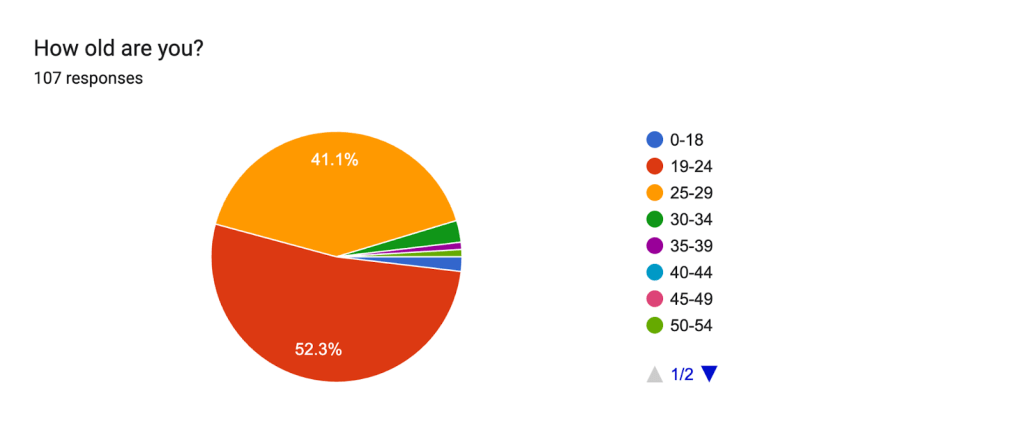
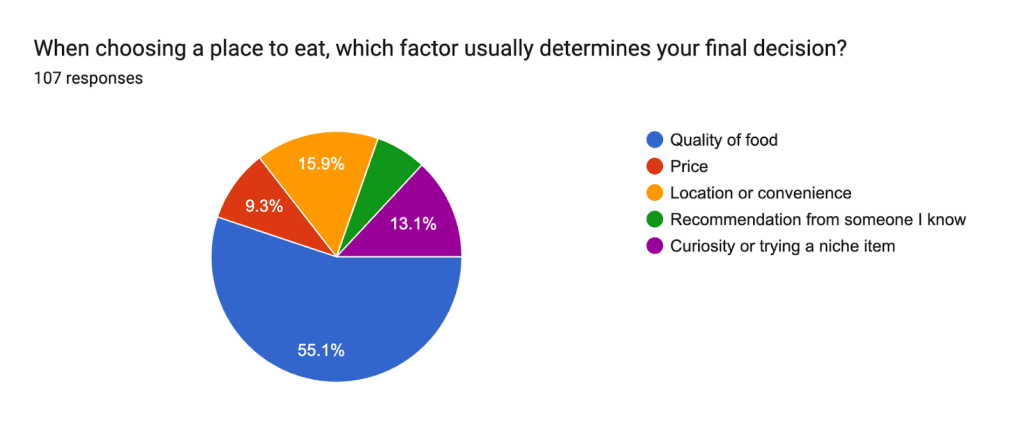

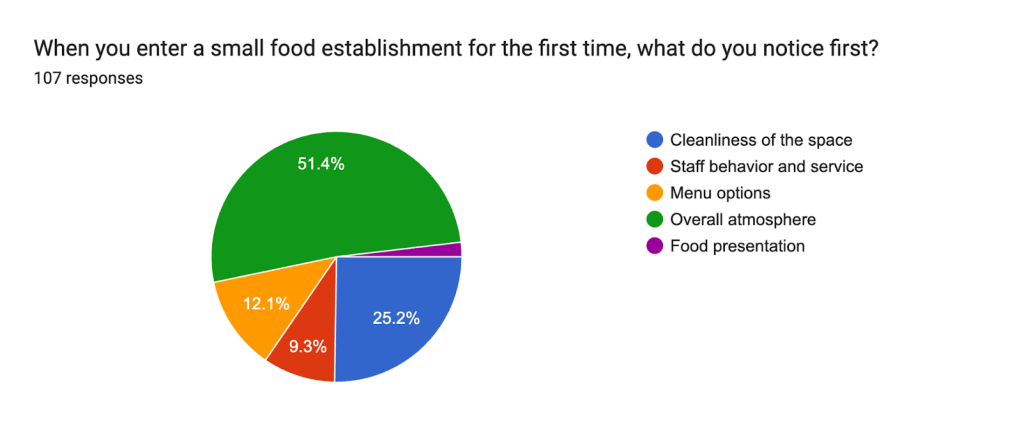

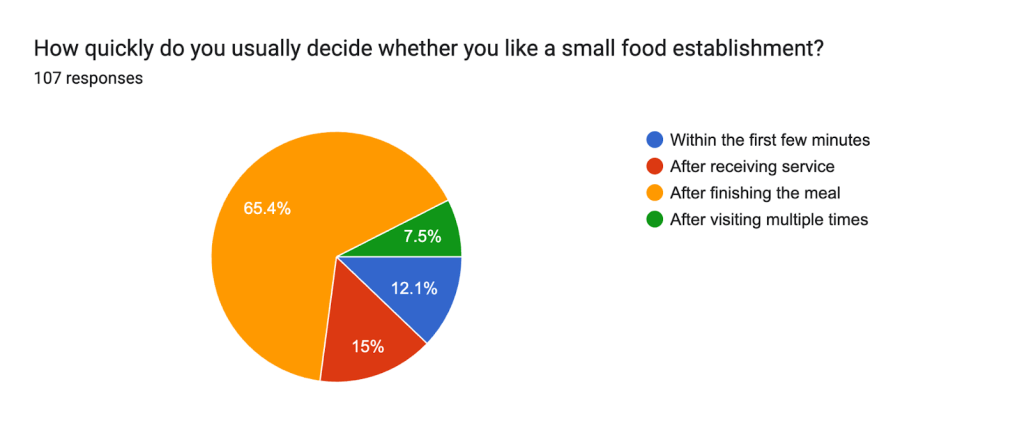
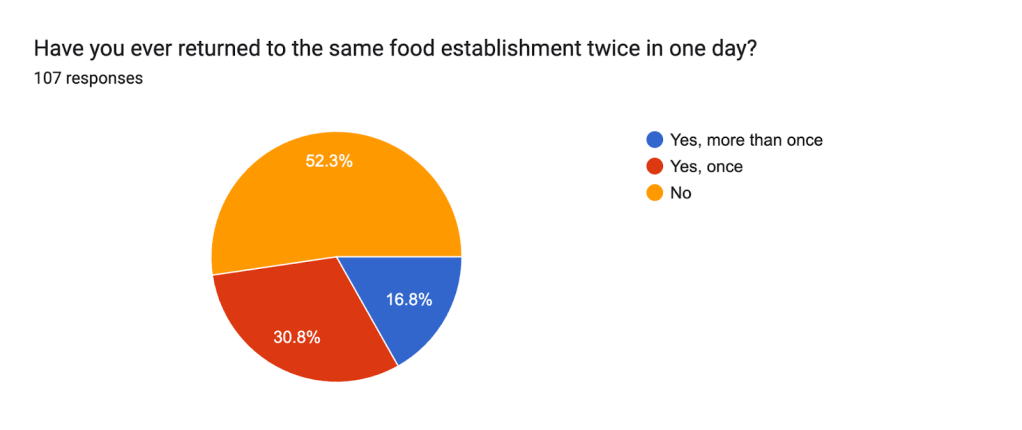
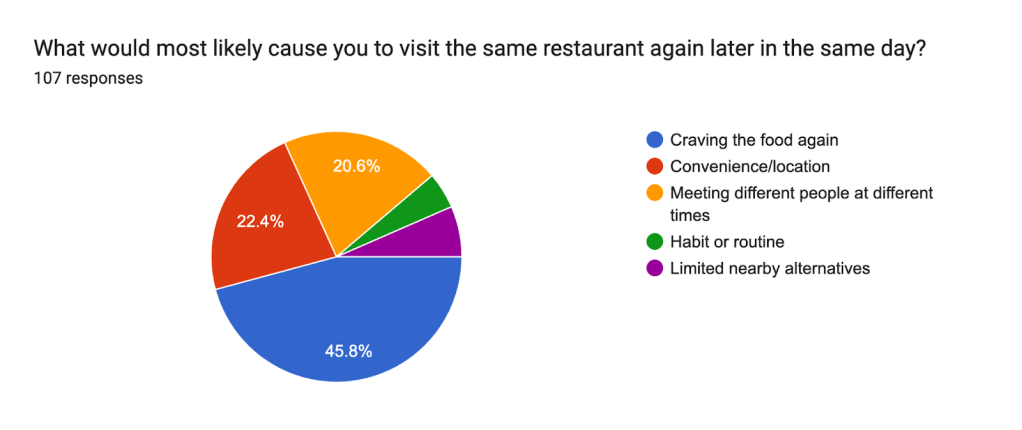
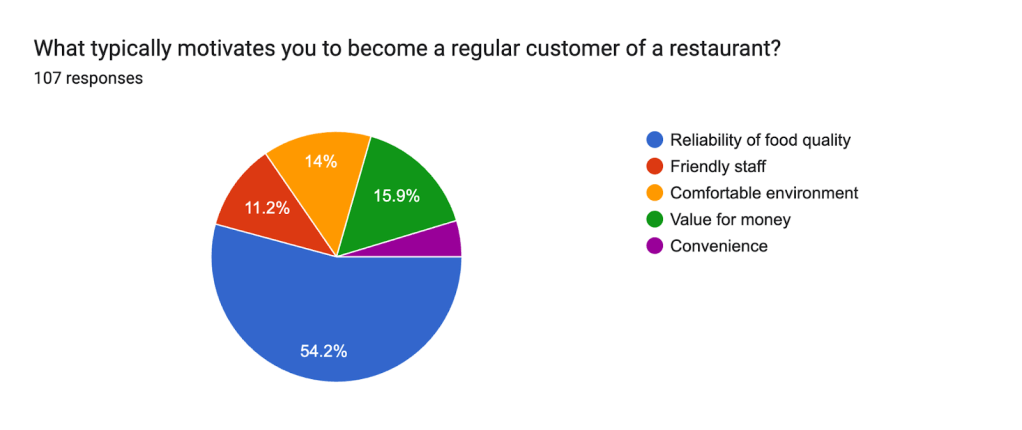
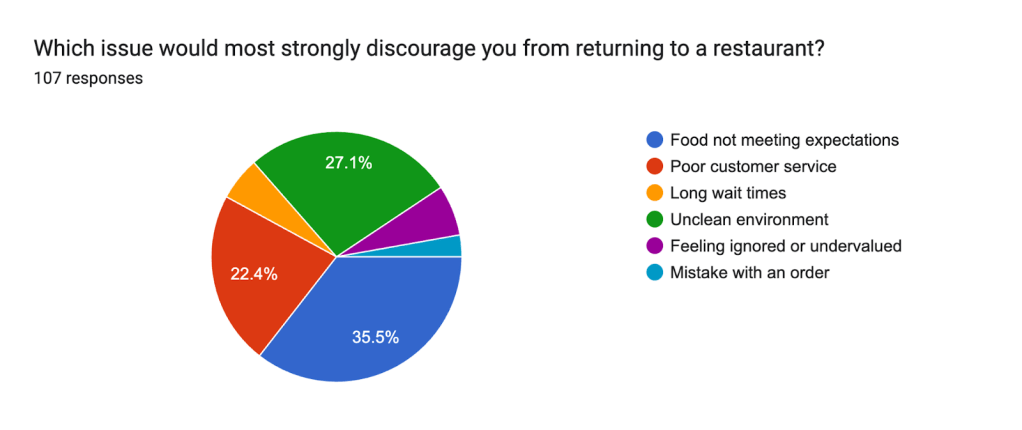
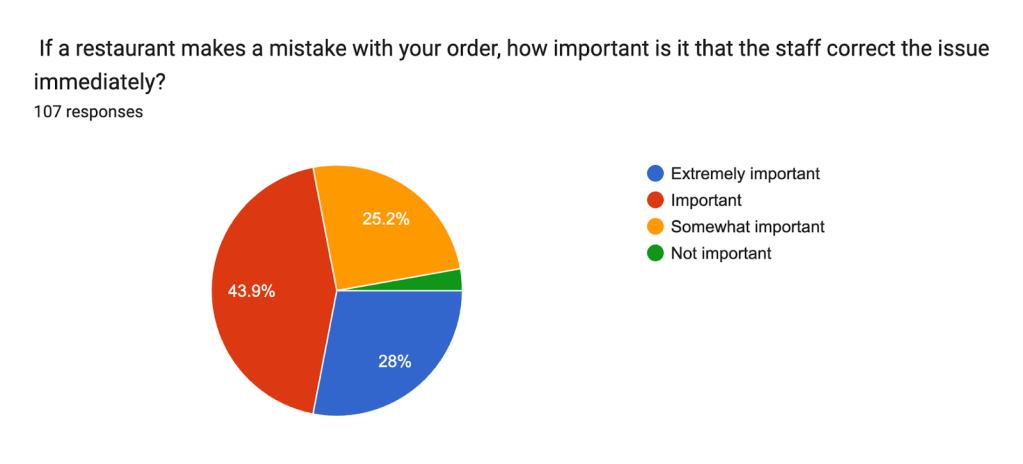
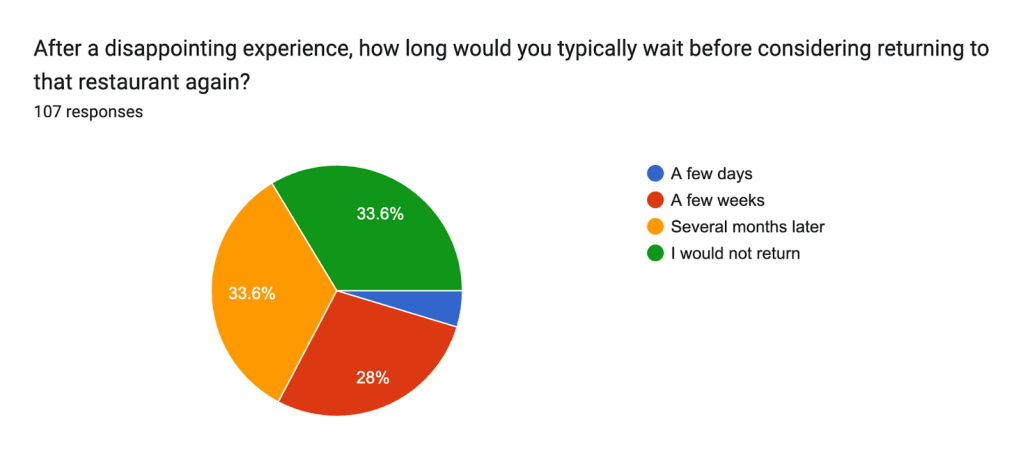
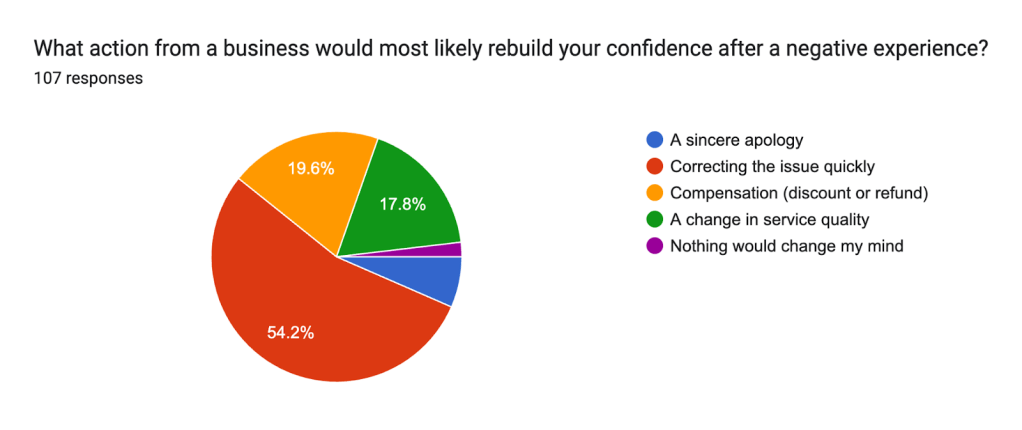
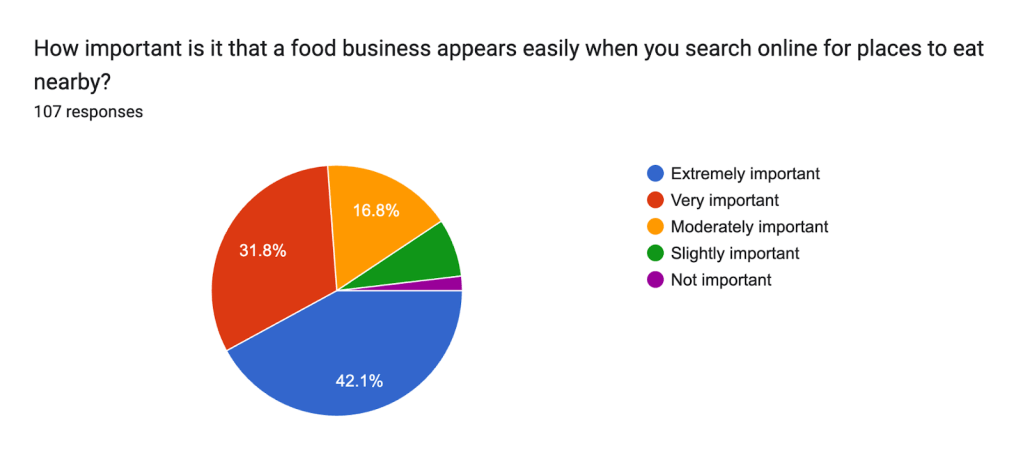
Appendix C:
FOCUS GROUP REPORT
Client: Main Street Gourmet Deli & Catering
Location: Mississauga, Canada
Participants: 8 adults (20–30 years old), mix of Canadian & American, mixed relationship status
Purpose: To understand how young adults evaluate local food establishments, what drives loyalty, and how online visibility and reputation influence spending behavior.
Research conducted by:
Noor Mian
SUNY Buffalo State
OVERVIEW
The focus group was facilitated on February 16, 2026. The participants were composed of
5 male and 3 females between the ages of 20 – 28. Self described as foodies, participants were chosen based on their eating out patterns, eating out at least 2 times a week. A total of 8 people participated.
The objective of this focus group was to understand different perceptions about how people in your age group choose food places, what makes you loyal, and how online visibility and reviews influence your decisions.
The opinions, attitudes, and ideas that are reported here are the perceptions of the participants.
PARTICIPANT PROFILE
A total of 14 people participated in the focus group. The composition of the group was as
follows:
Ages:
20:1
24: 1
25: 1
26: 4
28:1
Employment Status:
Employed: 7
Unemployed: 1
RESULTS:
Facilitator Guide:
“Thank you for being here. I’m conducting research for my graduate public relations campaign for Main Street Gourmet Deli in White Plains. I’m looking for honest opinions “
Ground Rules
No right or wrong answers
Speak honestly
Respect differing opinions
Everything stays confidential
I may ask follow-up questions
Questions:
Do first impressions matter when choosing a food place?
How quickly do you decide if a place is “worth trying”?
How do you judge a food establishment overall?
What are your non-negotiables?
What makes you never return?
Does online visibility matter to you?
If a place doesn’t show up on Instagram or Google easily, does that affect your decision?
Do you look at Google reviews before trying somewhere new?
How many stars is your minimum threshold?
Do you like being asked to leave a review?
What is the best way to request a review?
How much do online reviews influence you?
Do you trust reviews?
Are video reviews more credible than written ones?
What makes a local food place feel authentic?
Does family-owned branding influence you positively or negatively?
Are there differences in how you choose food places in Canada vs the U.S.?
Are you more influenced by aesthetic or taste?
Do Canadian vs American establishments feel different in terms of service expectations?
What makes you loyal to a food establishment?
Does personal interaction matter?
What increases your average order?
Do you like to see responses to reviews? If so, what stands out as a good interaction that might make you want to try the place?
How recent are the reviews that you trust and look at
What is the lowest rated restaurant that you would try, and based on how many reviews?
Does aesthetic influence perceived food quality?
What makes you try a place for the first time?
What makes you come back?
What would push you from occasional customer to regular?
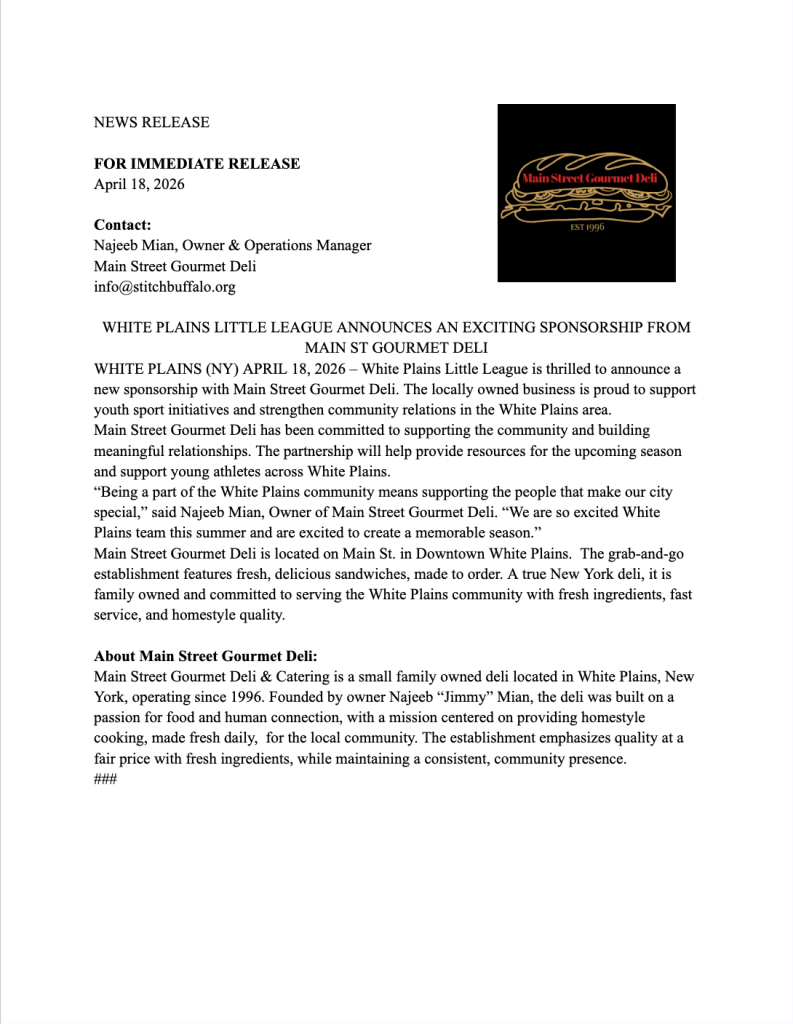
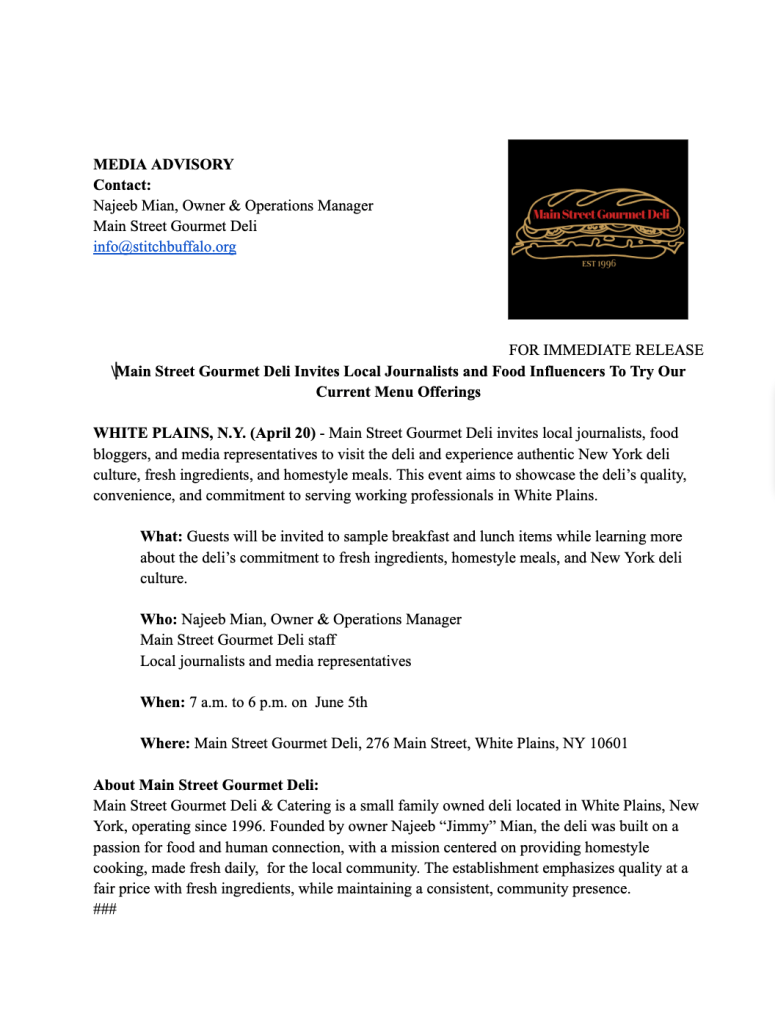


Leave a Reply